Every day, thousands of customer conversations flow through your call center, carrying valuable signals about what's working and what's breaking down. Most organizations capture these interactions but struggle to extract meaningful patterns from the noise, missing opportunities to identify coaching moments, detect customer frustration, and understand why some calls succeed while others fail. This article will show you how call center voice analytics transforms raw conversation data into actionable intelligence, helping you improve agent performance, elevate customer satisfaction, and make informed decisions that strengthen every interaction.
The challenge isn't just collecting call recordings. It's turning speech into insight fast enough to matter. That's where conversational AI becomes a game changer, automatically analyzing tone, sentiment, keywords, and conversation flow across your entire call volume. Bland.ai's conversational AI solutions work alongside your team to surface the patterns human reviewers would take months to find, identifying training opportunities, compliance issues, and customer pain points in real time so you can act while the information still matters.
Summary
- Most call centers analyze only 2% of their daily interactions, leaving 98% of customer conversations in a black box where valuable insights about intent, competitive intelligence, and operational friction remain inaccessible. The gap between data collection and actionable insight becomes so wide that by the time teams understand what went wrong, they've already repeated the mistake hundreds of times across thousands of calls.
- Traditional metrics like average handle time and call volume measure activity rather than effectiveness, creating a false sense of performance while missing what actually matters to customers. Only 13% of customers report resolving their issues in a single interaction, according to 2025 call center research, yet internal first-call-resolution metrics often paint a much rosier picture because they measure what agents mark in the system rather than what customers actually experience.
- Call center agent turnover averages 30 to 45% annually, driven partly by agents feeling unsupported and unclear about performance expectations when feedback arrives too vague or too delayed to act on. Without voice analytics, coaching becomes guesswork, with managers telling agents to "be more empathetic" without concrete examples of what that sounds like or specific moments when they missed opportunities in actual conversations.
- Voice analytics reveals compliance gaps that manual quality assurance misses by monitoring 100% of calls instead of randomly sampling 1 to 2% and hoping those samples represent reality.
- Real-time sentiment analysis detects emotional shifts during conversations, allowing supervisors to intervene before frustration escalates into customer churn.
Conversational AI addresses this by analyzing speech patterns, sentiment shifts, and conversation flow across every interaction in real time, surfacing coaching opportunities, compliance risks, and customer pain points while the context still matters, rather than weeks later during quarterly reviews.
Why Call Centers Struggle Without Voice Analytics
Acting on real-time intelligence isn't possible when you're drowning in unanalyzed conversations. Call centers handle thousands of interactions daily, yet most operate in the dark about what's actually happening on those calls.
Without voice analytics:
- You're measuring activity rather than understanding outcomes
- Tracking volume rather than value
- Hoping your agents improve without knowing what's holding them back
The Black Box Problem
Call centers receive thousands of phone calls a day, but only 2% yield useful insights. The other 98%? They go into a black box.
Historically, it's so difficult to extract insights from speech because of its sheer volume and qualitative nature. You're sitting on a goldmine of customer intent, competitive intelligence, and operational friction, but accessing it requires either massive manual effort or technical expertise most teams don't have.
The gap between data collection and actionable insight becomes so wide that by the time you understand what went wrong, you've already repeated the mistake hundreds of times.
The Decay of the Annual Audit: Moving from Hindsight to Real-Time Voice Intelligence
Call center leaders would either manually listen to a sample of calls and tag each with keywords (time-consuming and not comprehensive enough) or conduct a large, diligent analysis once a year (which requires technical skills AND understanding the output).
By the time you get insights, they're already obsolete. You also don't have confidence in the evidence to send it to other teams to push for changes.
What Traditional KPIs Miss
Average handle time tells you how long calls last, not whether they solved anything. Call volume shows you're busy, not whether you're effective. First call resolution sounds meaningful until you realize it measures what agents mark in the system, not what customers actually experience.
According to Call Center Statistics You Need to Know in 2025, only 13% of customers report resolving their issues in a single interaction, suggesting your internal metrics are probably painting a rosier picture than reality.
The Speed Trap: Why Efficiency Metrics are Silently Killing Customer Loyalty
The metrics most call centers track were designed for efficiency, not understanding. They measure speed and throughput because those were easy to count before technology could do better. But speed doesn't equal satisfaction.
A five-minute call that leaves a customer confused costs you more than a ten-minute call that builds loyalty. Traditional KPIs can't tell you which is which.
The Agent Performance Blind Spot
You know some agents consistently get better customer feedback than others, but you can't pinpoint why. One agent closes sales naturally while another with the same script struggles. One handles difficult customers with ease, while another escalates too quickly.
Without voice analytics, coaching becomes guesswork. You're telling agents to “be more empathetic” or “listen better” without concrete examples of what that sounds like or specific moments where they missed opportunities.
The Feedback Gap: Turning Agent Attrition into Growth Through Precision Coaching
Research shows that the average call center agent turnover rate is 30-45% annually. Part of that stems from agents feeling unsupported, unclear about what good performance actually looks like, and frustrated by feedback that's either too vague or too delayed to act on.
They want to improve. They just don't have the specific, timely insight they need to know what to change.
Missed Revenue Hiding in Plain Sound
Every call contains signals about what customers need, what frustrates them, and what they're willing to buy. Without analytics, those signals vanish the moment the call ends. An agent mentions a product that solves the customer's exact problem, but doesn't recognize the buying signal.
A customer asks about a feature your competitor offers, revealing a gap in your positioning, but nobody captures that intelligence. Someone calls to cancel, and buried in that conversation is the real reason (not the polite excuse they gave), but you never extract it.
Why Fragmented Data is the Silent Killer of Call Center Revenue
According to Call Center Statistics You Need to Know in 2025, 73% of customers expect agents to know their purchase history and previous interactions. When agents lack that context because your systems don't surface it automatically, you're not just frustrating customers.
You're:
- Leaving upsell opportunities on the table
- Repeating questions that have already been answered
- Making people feel like just another ticket number rather than a valued relationship
Compliance Risks You Can't See
Regulated industries face constant pressure to prove every interaction followed protocol. Without voice analytics, compliance monitoring means randomly sampling 1 to 2% of calls and hoping those samples represent reality.
That's not compliance. That's compliance theater.
The calls where agents accidentally:
- Disclosed protected information
- Skipped required disclosures
- Made promises the company can't keep
Those slip through because you're only checking a tiny fraction of what actually happened.
Building a Transparent Culture Through QA Calibration
Manual quality assurance creates another problem. Different reviewers interpret the same call differently. One marks it compliant, another flags it for review. Consistency becomes impossible when human judgment is your only tool, and agents lose trust in feedback that feels arbitrary or inconsistent.
The Customer Experience Inconsistency Tax
One customer calls and gets a helpful, knowledgeable agent who resolves their issue in minutes.
Another customer calls about the same problem:
- Gets transferred three times
- Repeats their information twice
- Hangs up frustrated
Without voice analytics, you can't identify why these experiences diverge so dramatically. You know inconsistency exists (customer surveys tell you that), but you can't trace it to specific behaviors, knowledge gaps, or process breakdowns.
Why ‘Agent Roulette’ is the Fastest Way to Kill Your Brand Promise
Inconsistency erodes trust faster than almost anything else. Customers don't expect perfection, but they do expect reliability. When the experience varies wildly based on which agent picks up, they stop believing your brand promises and start bracing for disappointment.
What's Actually Happening While You're Blind
While you're measuring how many calls your team handled today, your competitors are analyzing what those calls revealed. They're identifying which product features confuse customers, which objections agents struggle to overcome, and which scripts actually work versus which ones sound good in training but fail in real conversations.
Platforms like conversational AI surface these patterns automatically, analyzing 100% of interactions instead of a manual sample, and flagging coaching opportunities, compliance risks, and customer sentiment shifts in real time so teams can act while the context still matters.
How Moving from Anecdotes to Data-Driven Awareness Transforms Call Center Strategy
The gap between call centers with voice analytics and those without isn't just about efficiency. It's about operating with fundamentally different levels of awareness. One sees patterns, the other sees anecdotes. One improves systematically; the other reacts to crises. One knows what's working, the other guesses.
But knowing you have a blind spot doesn't tell you what you're missing.
Related Reading
- Call Center Optimization
- What Is a Warm Transfer in a Call Center
- How Do You Manage Inbound Calls?
- How Can You Verify the Authenticity of a Caller
- Call Center Authentication Best Practices
- Call Spike
- Inbound Call Handling
- Call Center Cost Reduction
- Call Center Security Best Practices
- Call Center Monitoring Best Practices
- Real-Time Monitoring in Call Center
- Intelligent Call Routing
- Inbound Call Center Sales Tips
- Inbound Call Routing
What Voice Analytics Can Reveal About Your Calls
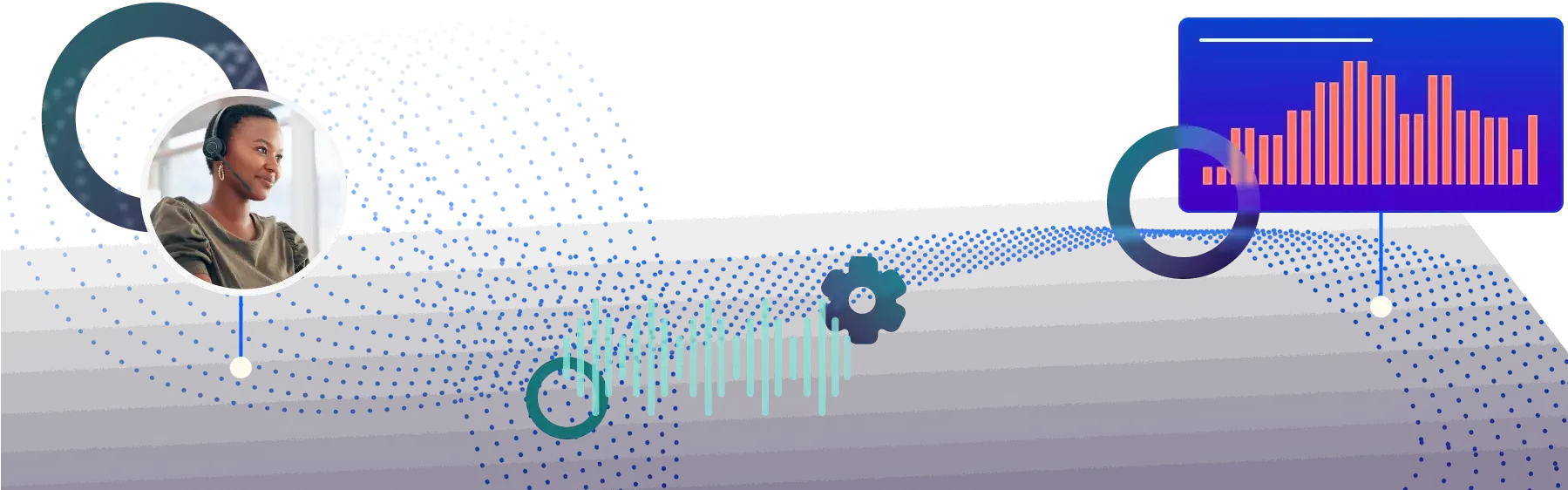
Voice analytics transforms recorded conversations into structured intelligence:
- It transcribes calls
- Identifies keywords and phrases
- Detects emotional tone
- Surfaces patterns across thousands of interactions simultaneously
The technology reveals what customers actually say versus what gets reported, what agents struggle with versus what they claim to understand, and which friction points repeat most often versus which ones feel most urgent in the moment.
Turn Conversations Into Searchable Intelligence
Contact centers process thousands of calls daily. Even short conversations accumulate into an overwhelming volume of unstructured data. Finding meaningful patterns in that noise used to require either listening to hundreds of recordings manually or accepting that most insights would simply vanish.
Voice analytics cuts through volume with precision. Search for specific keywords like “pricing,” “cancel,” or “competitor name” and instantly surface every conversation where those terms appeared.
Track how often customers mention:
- Confusion about billing
- Frustration with shipping delays
- Interest in features you don't yet offer
The data was always there. Now it's accessible without drowning your team in manual review work.
Beyond the Dashboard: Using Voice to Surface the ‘Silent Friction’ in Your CX
This searchability exposes gaps that metrics alone miss. When 200 customers mention “confusing checkout process” in a single week, but your conversion rate only dropped 3%, traditional dashboards tell you nothing's wrong.
Voice analytics tells you exactly what's breaking and how customers describe the problem in their own words. That specificity turns vague concerns into concrete improvement targets.
Extract Competitive Intelligence From Customer Conversations
Your customers constantly tell you about competitors. They mention:
- Better pricing was found elsewhere
- Features that another platform offers
- Service experiences that set expectations you're not meeting
Without voice analytics, those insights disappear the moment the call ends.
Competitive Intelligence: Turning the 'Mention' into a Strategic Pivot
Tracking competitor mentions reveals where you're losing ground before it shows up in churn reports. A customer casually mentions they're “also looking at [competitor]” during a sales call. That's not just information. That's a buying signal, a positioning gap, and a competitive threat wrapped into one sentence.
Voice analytics flags it automatically so sales leaders can adjust messaging, product teams can prioritize features, and account managers can intervene before the customer switches.
Weaponizing the Gap: Turning Competitor Weakness into Your Winning Edge
Negative sentiment about competitors creates opportunity. When customers describe poor experiences with alternatives, you're hearing exactly what not to do and exactly which pain points to emphasize in your positioning.
That intelligence is more valuable than any third-party review site because it comes from people actively making decisions in your market.
Identify Training Gaps Through Pattern Recognition
Quality assurance traditionally samples 1 to 2% of calls and hopes those examples represent reality. Voice analytics evaluates 100% of interactions, surfacing patterns that random sampling misses entirely.
One agent consistently struggles with objection handling but gets randomly selected for review during their best week. Another agent occasionally violates compliance protocols, but never during sampled calls. Partial visibility creates false confidence.
Precision Coaching: Scaling Success by Fixing the Hidden Friction in Every Call
Analyzing complete conversation data reveals which agents need support and exactly where they're struggling.
Speech analytics identifies:
- Agents who talk over customers
- Miss buying signals
- Escalate too quickly
It shows which scripts work in practice and which sound good in training but fail in real interactions. It highlights knowledge gaps by tracking which questions agents can't answer confidently and which topics trigger the most transfers.
Micro-Coaching: Closing the Loop Between Performance and Feedback
According to research from Xima Software, the average call center agent turnover rate sits between 30 to 45% annually. Part of that stems from agents feeling unsupported, unclear about performance expectations, and frustrated by feedback that arrives too late to act on.
Voice analytics provides specific, timely coaching opportunities instead of vague directives. “Be more empathetic” becomes “Here’s the exact moment in yesterday's call where acknowledging the customer's frustration would have changed the outcome.”
100% Visibility: Moving from Random Sampling to Real-Time Reality
Platforms like conversational AI analyze:
- Every interaction in real time
- Flagging coaching moments
- Compliance risks
- Sentiment shifts as they happen
Teams move from hoping their sample represents reality to knowing exactly what's occurring across every conversation, every day.
Surface Hidden Revenue Opportunities
Every call contains signals about what customers need, what frustrates them, and what they're willing to buy. Agents mention products that solve exact problems but don't recognize buying intent.
Customers ask about capabilities that indicate upsell readiness, but the conversation moves on. Someone expresses interest in a premium feature, but the agent lacks confidence to discuss pricing. Without analytics, those moments vanish.
Intent Discovery: Turning Every Conversation into a High-Impact Sales Signal
Voice analytics surfaces missed opportunities by tracking keywords associated with buying intent. When customers say “I need,” “Can you,” or “What about,” the system flags those conversations for review.
Sales leaders identify which opportunities agents are missing and why. Product teams discover which features customers ask about most often. Marketing learns which messaging resonates versus which claims customers question or ignore.
From Transactions to Relationships: Solving the ‘Context Gap’ in Modern CX
According to Xima Software, 73% of customers expect agents to know their purchase history and previous interactions.
When systems don't surface that context automatically:
- Agents repeat questions
- Miss cross-sell opportunities
- Make customers feel like they're in a transaction, not a relationship
Voice analytics connects conversation content with customer history, revealing when someone who bought Product A six months ago is now describing a problem that Product B solves perfectly.
Detect Compliance Violations at Scale
Regulated industries require proof that every interaction followed protocol. Manual quality assurance checks a tiny fraction of calls and hopes nothing problematic happened in the other 98%. That's not compliance. That's risk exposure with documentation.
Voice analytics monitors 100% of calls for required disclosures, prohibited language, and adherence to processes.
It flags conversations in which agents:
- Skipped mandatory statements
- Made promises the company can't keep
- Discussed topics outside the approved guidelines
Instead of discovering violations weeks later during random audits, compliance teams receive alerts immediately and can intervene before patterns develop.
The Digital Safety Net: Eliminating Oversight with Real-Time Protocol Enforcement
Consistency improves when technology enforces standards instead of relying on human memory under pressure. Agents working through high call volumes forget steps. New hires don't yet have protocols memorized.
Voice analytics prompts them in real time, reducing violations caused by oversight rather than intent.
Understand Why Customers Actually Contact You
Call volume tells you how busy your team is. Call reasons tell you what's broken. Voice analytics automatically categorizes conversations by topic, revealing which issues drive the most contacts and how those patterns shift over time.
When “password reset” suddenly spikes 40% in a week, that's not random. Something changed. Maybe a recent product update broke the login flow. Maybe an email campaign drove traffic from users who haven't logged in for months. Voice analytics surfaces the spike immediately, so you can investigate root causes rather than just handle increased volume.
Plugging the Leaks: Using Voice Data to Master Call Deflection and Self-Service
Tracking call reasons also reveals where self-service gaps exist. If hundreds of customers call asking the same question that's answered in your FAQ, either they can't find the FAQ or the answer isn't clear enough.
Voice analytics quantifies exactly how many calls you could deflect by:
- Improving documentation
- Adjusting site navigation
- Adding chatbot responses for common questions
Measure Emotional Impact, Not Just Outcomes
First-call resolution indicates whether agents marked the issue as resolved. It doesn't tell you whether customers left satisfied, confused, or angrier than when they called. Sentiment analysis fills that gap by detecting emotional tone throughout conversations.
Sentiment Recovery: Measuring the ROI of De-escalation
Voice analytics identifies when customers sound frustrated, when that frustration escalates or de-escalates, and which agent behaviors correlate with positive sentiment shifts. A customer calls angry about a billing error. The agent apologizes, explains what happened, and processes a refund.
The call ends with the issue resolved. Did the customer's tone shift from angry to satisfied, or did it stay frustrated throughout? Sentiment analysis answers that question at scale across every interaction.
The Trust Gap: Moving Beyond ‘Resolved’ to ‘Satisfied’ with Emotional Intelligence
Tracking sentiment patterns reveals which issues create the most emotional friction, even when resolution rates look fine. Customers might accept your explanation for a shipping delay, but if they consistently sound disappointed or skeptical during those conversations, you're solving the immediate problem while eroding long-term trust.
That distinction matters, and traditional metrics can't capture it. But seeing the patterns is only valuable if you know what to do with them.
Related Reading
- How to Improve First Call Resolution
- Inbound Call Analytics
- First Call Resolution Benefits
- Multi-turn Conversation
- How to De-Escalate a Customer Service Call
- How to Improve Call Center Agent Performance
- How to Handle Irate Callers
- Edge Case Testing
- Handling Difficult Calls
- How to Integrate VoIP Into CRM
- Best Inbound Call Tracking Software
- How to Handle Escalated Calls
- Acceptable Latency for VoIP
- How to Reduce After-Call Work in a Call Center
- How to Automate Inbound Calls
- How to Set Up an Inbound Call Center
- Best Inbound Call Center Software
- GoToConnect Alternatives
- GoToConnect vs RingCentral
- CloudTalk Alternatives
- Contact Center Voice Quality Testing Methods
- Best After-Hours Call Service
- Aircall vs CloudTalk
How to Leverage Voice Analytics to Improve Your Call Center

Catch Customer Dissatisfaction Early
Real-time sentiment analysis monitors emotional tone throughout every conversation. When frustration surfaces, the system flags it immediately so supervisors can step in before the interaction deteriorates.
This isn't about policing agents. It's about catching moments where a customer's patience is eroding and intervening while there's still time to recover the relationship.
The Escalation Early Warning System: Using Tone and Pace to Prevent the Hang-Up
According to Sprinklr's analysis of customer service data, 67% of customers hang up in frustration when they cannot reach a customer service representative. That same frustration builds during calls when customers feel unheard or when their issue keeps escalating without resolution.
Voice analytics detects emotional shifts in real time, tracking tone, pace, and word-choice patterns that signal a call is heading toward failure.
The Seamless Rescue: Empowering Supervisors with Real-Time Contextual Handoffs
The difference between catching dissatisfaction early and discovering it later shows up in resolution rates. When a supervisor joins a call after detecting rising frustration, they arrive with full context. The customer doesn't repeat their story for the third time.
The supervisor sees exactly where the conversation stalled and can address the specific friction point, rather than starting over. That intervention often transforms what would have been a lost customer into someone who feels genuinely heard.
Help Agents in the Moment
Agent assistance features analyze conversations as they happen and surface relevant information without agents needing to search for it.
A customer mentions a billing issue, and the system immediately displays their:
- Payment history
- Recent charges
- Common resolution paths
An agent struggles with an objection they haven't encountered before, and real-time prompts suggest proven responses based on what's worked in similar situations.
The Digital Co-Pilot: Turning New Hires into Top Performers with Real-Time Assist
This support matters most for new agents still building confidence and experienced agents facing unusually complex scenarios. New hires don't yet have hundreds of calls memorized. They're following scripts but lack the pattern recognition that comes from repetition.
Real-time guidance fills that gap, suggesting next steps when the conversation veers off script or when a customer asks an unexpected question. Experienced agents benefit during edge cases. They know the standard playbook, but voice analytics surfaces solutions from across the entire team's history, not just their own experience.
Eliminating Service Variance: Building a Unified Single Source of Truth
The result is more consistent service quality regardless of which agent picks up. Customers stop experiencing wild variation between representatives because the system ensures everyone has access to the same knowledge and proven approaches during every interaction.
Match Callers with the Right Agent
Skills-based routing uses conversation analysis to identify what a customer needs before connecting them to an agent.
Voice analytics:
- Detects keywords
- Emotional tone
- Stated intent during initial interactions or IVR prompts
It then routes the call to agents with relevant expertise.
A customer calling about a technical integration issue gets connected to someone with an engineering background. A frustrated customer expressing urgency is routed to agents who consistently de-escalate tense situations.
Precision Pairing: Leveraging Predictive Routing to Turn Data into Relationships
Predictive routing goes further by analyzing historical patterns. The system learns which agent-customer pairs yield the best outcomes from past interactions. When a high-value customer calls, the system routes them to agents who've successfully handled similar accounts.
When someone calls about a product they purchased six months ago, they reach an agent familiar with that product line rather than someone who needs to research it during the call.
The Frictionless First-Contact: Why ‘Speed-to-Expert’ is the New Gold Standard
Research from Sprinklr shows that 73% of customers say that valuing their time is the most important thing a company can do to provide good service. Getting connected to the wrong agent wastes that time immediately.
The customer:
- Explains their issue
- The agent realizes they can't help
- The transfer process begins
Voice analytics eliminates that friction by making the first connection the right one.
Spot Sales Opportunities
Buying signals appear throughout conversations, but agents miss them when they're focused on resolving the immediate question. A customer asks, "Can your system handle multiple locations?" during a support call about their current single-site setup.
That's not just curiosity. That's expansion intent. Voice analytics automatically flags those moments, alerting agents to probe deeper or routing the conversation to sales when appropriate.
Revenue Orchestration: Using Intent Intelligence to Bridge the Support-to-Sales Gap
Intent detection tracks specific phrases associated with purchase readiness. “I need,” “What would it cost to,” “Can you,” and “How soon could we” all indicate someone mentally moving from consideration to decision.
The system surfaces these signals in real time so agents can respond appropriately instead of letting the moment pass. A support agent might not feel comfortable discussing pricing, but they can seamlessly transfer to sales with full context about what triggered the interest.
The Expansion Engine: Turning Support Conversations into Revenue Opportunities
Cross-sell and upsell opportunities become visible when voice analytics connects conversation content with customer history. Someone who bought Product A six months ago now describes a workflow challenge that Product B solves perfectly.
Without analytics, the agent might sympathize with the challenge but miss the connection. With analytics, the system prompts them with relevant product information and suggests mentioning the solution.
Audit Compliance Automatically
Manual quality assurance samples a tiny fraction of calls and hopes nothing problematic happened in the rest. Voice analytics monitors every conversation for required disclosures, prohibited language, and adherence to processes.
When an agent skips a mandatory statement, discusses topics outside approved guidelines, or makes promises the company can't keep, the system flags it immediately.
The Automated Auditor: Ensuring 100% Compliance in the Era of AI Voice
Regulatory standards, such as recording requirements, consent collection, and data handling, are enforced consistently across all interactions. The technology doesn't forget steps or make exceptions during high-pressure moments.
It verifies that each required element occurred and documents exactly when and how it was delivered. That creates defensible audit trails without requiring supervisors to manually review thousands of recordings.
Identifying Training Gaps at Scale
Compliance monitoring also reveals training gaps before they become violations. When multiple agents consistently skip the same disclosure or struggle with specific regulatory language, that pattern indicates a training issue rather than individual performance problems.
Voice analytics surfaces those patterns, so training teams can address systemic gaps rather than coaching agents one by one.
Cognitive Offloading: How AI Compliance Turns ‘Risky Pressure’ into ‘Guided Precision’
Traditional approaches rely on agents remembering protocols under pressure while handling difficult customers, complex issues, and time constraints simultaneously. Voice analytics removes that burden by prompting agents in real time and automatically verifying compliance.
Teams using conversational AI analyze 100% of interactions for compliance markers, reducing risk exposure while freeing quality assurance teams to focus on coaching rather than auditing.
AI Voice Agents That Do the Talking
Advanced voice AI now handles routine customer inquiries with conversational quality that matches human interaction. These agents respond to direct questions, process simple requests, and autonomously route complex issues to appropriate departments or human agents when needed. The technology has moved beyond rigid phone trees into genuinely helpful conversations that adapt based on what customers say.
The Elastic Contact Center: Balancing Instant Automation with Empathetic Human Resolution
This shift matters because it addresses the volume problem without sacrificing quality. Call centers can't hire fast enough to handle peak demand, and customers hate waiting.
AI voice agents absorb routine inquiries instantly, reducing queue times for human agents who can then focus on situations requiring:
- Judgment
- Empathy
- Complex problem-solving.
A customer calling to check order status gets an immediate answer from AI. A customer who calls because their order arrived damaged is connected to a human who can make judgment calls about replacements or refunds.
The Contextual Handoff: Why ‘Starting Over’ is a Customer Service Relic
The autonomous routing capability prevents customers from getting stuck with AI when they need human help. The system recognizes when a conversation exceeds its capabilities and transfers seamlessly with full context.
The human agent sees the entire AI conversation, understands what the customer has already tried, and continues from there rather than starting over.
Voice Biometrics for Instant Security
Authentication traditionally wastes the first minute of every call while agents verify identity through:
- Security questions
- Account numbers
- Personal information
Voice biometric technology authenticates callers within seconds by analyzing unique voiceprint characteristics. The customer speaks naturally during the greeting, and the system confirms their identity in the background before the agent even begins the conversation.
Identity at the Speed of Speech: Why Voice Biometrics is the Future of Frictionless Security
This approach eliminates friction while improving security. Customers don't answer the same verification questions every time they call. Agents don't spend time walking through authentication protocols.
The conversation starts immediately with the actual issue, respecting the customer's time and improving efficiency. Security actually strengthens because voiceprints are harder to fake than answers to questions about mothers' maiden names or account numbers that might appear in data breaches.
Beyond the Voiceprint: Leveraging Behavioral Intelligence to Stop Social Engineering
Integration with voice analytics adds an additional layer of security. The system tracks behavioral patterns beyond just voice characteristics.
If someone's voiceprint matches but their conversation pattern seems unusual (asking questions they should already know answers to, requesting changes they've never made before), the system flags it for additional verification.
Guardrails for Bias and Fairness
Voice recognition accuracy varies across accents, dialects, and speech patterns. Systems trained primarily on one demographic often struggle with others, creating unfair experiences in which some customers are understood immediately, while others must repeat themselves constantly.
Regular bias audits assess how well the technology serves diverse populations and identify where accuracy gaps exist.
The Accuracy Paradox: Why Intersectionality is the New Standard for AI Auditing
These audits go deeper than overall accuracy metrics. They measure performance across specific accent groups, age ranges, and speech characteristics to reveal disparities that aggregate statistics hide.
A system might show 95% overall accuracy but only 80% for certain regional accents. That gap creates frustration for affected customers and undermines trust in the technology.
Algorithmic Inclusion: Why the Best Voice AI is Trained on the ‘Edges,’ Not the ‘Averages’
Addressing bias requires ongoing testing with diverse voice samples and continuous model refinement. Organizations committed to fair service ensure their training data represent their actual customer base rather than convenient sample populations.
They test specifically for edge cases and unusual speech patterns rather than just optimizing for the average case.
Privacy and Data Rules You Can't Ignore
Recording regulations vary by jurisdiction. Some states require all-party consent, others allow single-party consent. Call centers operating across state lines must follow the strictest applicable standards to avoid legal exposure.
Voice analytics systems need built-in compliance features that automatically handle disclosure requirements based on caller location and applicable regulations.
The Privacy-First Perimeter: Architecting Compliant Voice AI for High-Stakes Industries
GDPR, HIPAA, and industry-specific consent laws create additional complexity for organizations in regulated sectors.
- Healthcare providers can't record conversations that contain protected health information without specific consent and appropriate security measures.
- Financial institutions face strict requirements about how long recordings must be retained and who can access them.
Voice analytics platforms must accommodate these requirements through:
- Configurable retention policies
- Access controls
- Audit logging
The Transparency Dividend: Building Radical Trust in an AI-First World
The concern isn't just about following rules. It's about maintaining customer trust. People are increasingly aware of how their data is used and are becoming increasingly skeptical of organizations that seem careless with privacy.
Transparent practices around:
- Recording
- Storage
- Usage build confidence
Violations or perceived carelessness destroy it permanently. But having the tools and understanding the possibilities only matters if you know how to implement them effectively.
Turn Voice Insights Into Real Call Center Results with Bland AI
Stop Guessing, Start Knowing
Your call center generates intelligence every minute.
Conversations reveal:
- Why customers cancel
- Where agents struggle
- Which products confuse people
- What competitors promise that you don't deliver
The question isn't whether those insights exist. It's whether you can access them before they become irrelevant.
Bland AI captures every interaction in real time, analyzing speech patterns, sentiment shifts, and conversation flow so you understand what's actually happening on the line. Not a sample. Not a guess based on average handle time. Every call, every word, every emotional signal becomes searchable, actionable intelligence that improves outcomes immediately rather than weeks later during quarterly reviews.
Act Before Problems Escalate
Frustrated customers don't always announce they're about to churn.
- They ask pointed questions about contract terms.
- Their tone shifts from cooperative to clipped.
- They mention competitors casually.
These signals appear throughout conversations, but without real-time detection, they vanish the moment the call ends.
The Empathy Bridge: Turning Real-Time Sentiment into Precise Performance Gains
Bland AI identifies dissatisfaction as it develops, flagging sentiment changes so supervisors can intervene while the relationship is still recoverable.
Agents receive data-driven coaching on specific moments when they:
- Missed buying signals
- Talked over customers
- Unnecessarily escalated situations
Training becomes precise instead of generic because you're pointing to actual examples from their recent calls, not abstract principles from a manual.
Route Smarter, Resolve Faster
Matching callers with the right agent transforms efficiency. Someone calling about a technical integration reaches an agent with an engineering background. A high-value customer frustrated by repeated issues connects with your most skilled relationship manager. Predictive routing uses conversation analysis and historical patterns to automatically make these connections, eliminating transfers that waste time and erode trust.
Automated follow-ups ensure nothing falls through the gaps between shifts or departments. When an agent promises to send documentation or escalate an issue, the system tracks whether the action is completed and prompts the agent to complete it. Customers stop calling back to check on promises because the work gets done without requiring their vigilance.
Maintain Compliance Without Manual Audits
Monitoring 100% of calls for required disclosures, prohibited language, and process adherence removes the risk exposure that comes from sampling 2% and hoping the rest followed protocol.
Bland AI verifies that mandatory statements were issued, flags conversations where agents deviated from approved guidelines, and automatically creates defensible audit trails. Compliance becomes systematic rather than aspirational.
Quality stays consistent across every conversation because the technology doesn't forget steps during high-pressure moments or make exceptions when call volume spikes. Agents receive real-time prompts for required elements, and supervisors see exactly where training gaps exist across the team rather than discovering violations one random review at a time.
Turn Conversations Into Competitive Advantage
Conversational AI analyzes speech, sentiment, and patterns across all interactions simultaneously, surfacing the intelligence your competitors are missing while they're still measuring how many calls their teams handled yesterday.
You'll identify which objections agents struggle to overcome, which product features confuse customers, and which scripts actually work in practice versus which ones fail during real conversations.
Don't just collect data. Use it to improve every call. Book a demo today and see how Bland AI transforms call center operations from reactive firefighting into proactive improvement, boosting customer satisfaction while driving measurable results that show up in:
- Retention rates
- Revenue per interaction
- Agent performance metrics that actually matter
Related Reading
- Nextiva Alternatives
- Aircall Vs Talkdesk
- Talkdesk Alternatives
- Twilio Alternative
- Nextiva Vs Ringcentral
- Dialpad Vs Nextiva
- Dialpad Alternative
- Dialpad vs RingCentral
- Convoso Alternatives
- Aircall Alternative
- Five9 Alternatives
- Aircall Vs Dialpad
- Aircall Vs Ringcentral
- Five9 vs RingCentral
- Bitrix24 Alternatives